How ASTRA thinks about the trading journey
Market, position, confirmation, active trade, settlement, and history as connected stages of one user journey.
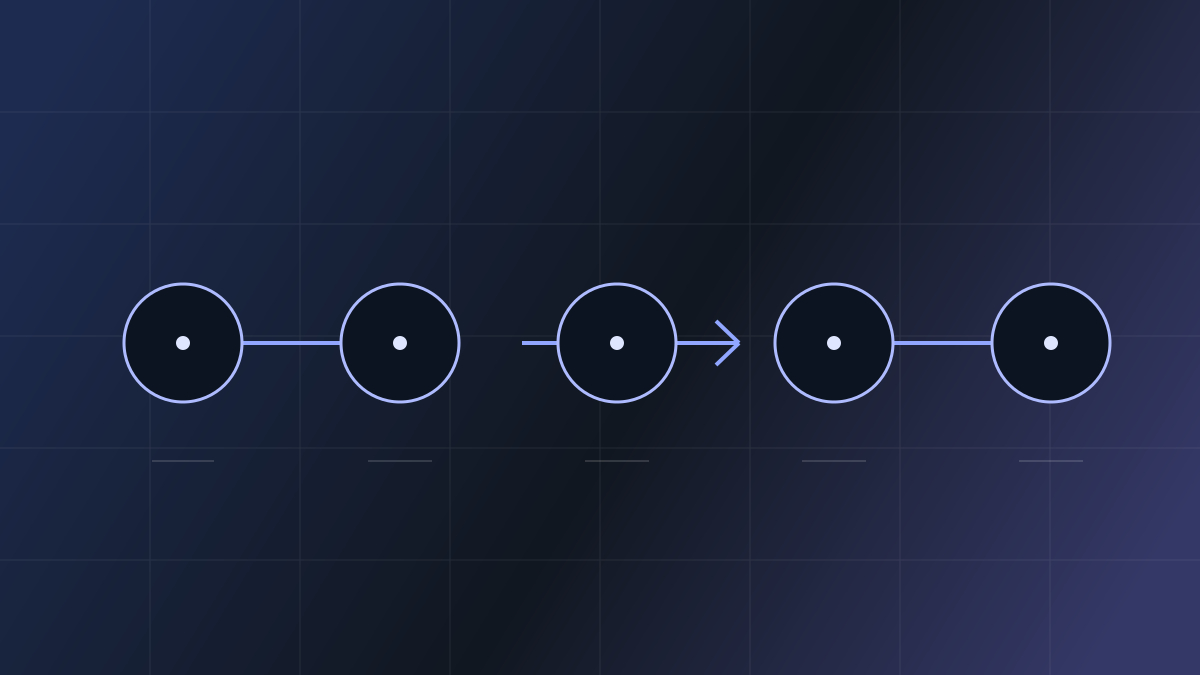
“Each next screen should answer a question raised by the one before it.”
A journey, not a set of pages
The journey begins with orientation: a person selects a market and reviews available context. Next come action parameters and a chance to check them before confirmation. Once submitted, it matters to see what became active and what state it is in.
The following stages are completion and history. People need a consistent transition from an active position to a final record, not an action disappearing without explanation. This sequence makes it possible to think about the product as a whole.
No promise of an outcome
Explaining a journey is not a guarantee of execution at a particular price or of a financial result. Market conditions change, so users should review parameters and confirmations carefully.
ASTRA's product aim is to make steps observable and understandable. When market, active position, and history connect, people can regain context after navigating away or taking a break.
Market context and parameters should meet
Moving from a market selection to an action form should not require someone to reconstruct context from scratch. The parameter view needs to show which instrument the operation concerns, which values are selected, and what can still be changed before confirmation. That can reduce errors caused by lost orientation, but it does not replace careful review of terms.
After submission, the product should distinguish receipt of a request from its later processing. Feedback must match the actual state and preserve access to details. If someone switches markets, active actions should not disappear simply because the current screen is focused on a different instrument.
Completion should lead to history
History is not an archive used only for rare checks. It continues the user journey by showing the sequence of actions and connecting an outcome to its original request. Records need recognizable dates, understandable states, and enough context to distinguish operations without exposing unnecessary personal information.
The relationship between an active position and its completed record matters after navigation or sign-in on another session. When a product helps people recover context, they spend less effort reconstructing what happened. That improves discoverability and understanding; it is not a promise about a trade's outcome.
A journey must account for failure
A flow should be considered beyond ideal network conditions. Requests can be repeated, delayed, interrupted by a page refresh, or viewed in two sessions at once. The interface needs to stay consistent with server state and avoid encouraging another action while the previous request is still being processed.
That is why observability matters at every step: what the user saw, what they confirmed, which state the product returned, and where the record can be found. This journal explains the principle at a high level; it does not expose execution internals or promise that networks and external services never slow down.
One journey creates several testable expectations
An end-to-end journey can be reviewed with one question at each step: what does the user think happened, and what has the system actually confirmed? The answers should agree across the interface, history, and a later sign-in. If surfaces disagree, the state source needs correction rather than a reassuring sentence on one screen.
For a product team, this is a practical test of connectedness: follow the flow as someone who does not know the platform's internals. The system should explain transitions plainly, keep details reachable, and avoid promising an outcome that depends on external conditions. Product logic can remain understandable without exposing sensitive implementation mechanisms.
This material is for information only and is not financial advice.
Related reading
Why active positions should stay in context
How position visibility helps people stay oriented when switching markets or returning to the product.
From market data to a reliable trading experience
Why prices need context, clear timing, and understandable interface responses when data or connections are interrupted.
ASTRA EXCHANGE
Want to explore ASTRA?
Learn about the platform and create an account by invitation.